BRIDGE
Biostatistical Research for Inclusive Diverse Genomic Equity
Equitable Methods for Genomic Medicine
Statistical Methods Medical Genomics Equitable AI

We develop statistical methods and apply them to large-scale omics data — with a future focus on adjusting for selection bias and improving representational equity across ancestry, sex, and population strata.

Bridging Statistics and Equity in Medical Genomics

Our research operates at the intersection of statistical methodology and large-scale omics, driven by a foundational commitment to representational equity in biomedical science.

We analyze high-dimensional omics data—including genomics and transcriptomics—to characterize the genetic architecture of complex traits. Concurrently, we develop statistical methods and computational pipelines that are mathematically rigorous, biologically interpretable, and equitable by design.

Going forward, a central focus of our laboratory is identifying and mathematically adjusting for selection bias in biomedical AI. The systematic underrepresentation of diverse ancestries and sex-stratified variations in training cohorts currently yields inequitable model performance across population strata. We aim to construct robust methodological frameworks that mitigate these biases, ensuring valid statistical inference and equitable applications across all diverse populations.

23+ Peer-Reviewed Publications
3 Open-Source Tools
(BALLI · COBRA · LASER)
2 Registered Patents
10+ Complex Diseases Studied

Core Research Directions

⚙️
StatisticsAlgorithmSoftware

Statistical Method Development

Novel statistical algorithms for high-dimensional omics data with emphasis on rigor and biobank-scale scalability.

🧬
GWASbulk RNA-seqscRNA-seq

Medical Genomics & Multi-Omics

Large-scale omics data analyses to dissect the genetic underpinnings of complex traits across diverse human cohorts.

⚖️
EquityAIML

Equity in Biomedical AI

Investigating selection bias in AI/ML models trained on genomic and clinical data, with focus on ancestry, sex, and demographic underrepresentation.

Selected Recent Works

📄 Journal Articles

First-author and corresponding-author only.   Co-First Corresponding Revision Invited

* equally contributed · † corresponding author

📄   View Full Publication List on Google Scholar →

🛠️ Software

🔐 Patents

Our Team

Principal Investigator

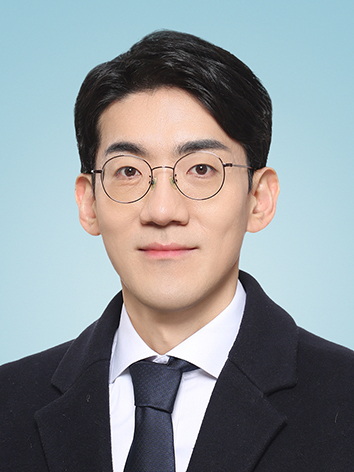
Kyungtaek Park, Ph.D.
Assistant Professor  Sep. 2025 –
Department of Statistics, Jeonbuk National University

A statistical geneticist whose work spans population genomics and equitable AI — building methods that are scientifically rigorous and broadly applicable across diverse human populations.

Professional Experience

  • Research Assistant Professor Institute of Health and Environment, Seoul National University  2021 – 2025

Education

  • Ph.D. · Interdisciplinary Program of Bioinformatics Seoul National University  2015 – 2021
    Advisor: Prof. Sungho Won B.S. · Biological Sciences Seoul National University  2009 – 2015
    Minor: Business Administration, Brain-Mind-Behavior

Students & Researchers

👤

SeungYoon Kang

Undergraduate Student

👤

Sangho Ku

Undergraduate Student

👤

Haeun Song

Undergraduate Student

👤

Seunghyun Kim

Undergraduate Student

🚀 We Are Hiring!

We are actively looking for motivated students or researchers interested in any of the following areas:

 · Statistical method development — algorithms for high-dimensional biological data
 · Medical genomics — genomics, transcriptomics, multi-omics
 · Equity in biomedical AI — selection bias, representational equity across populations

No prior background in biology, statistics, or programming is required. We will provide rigorous, step-by-step training from the foundational level. A strong motivation to learn and scientific curiosity are the only prerequisites.

If you are ready to explore these fields, please send your CV and a brief statement of interest to kpark@jbnu.ac.kr.

Get In Touch

📧 kpark@jbnu.ac.kr

🏛️ Department of Statistics, Jeonbuk National University

📍 Jeonju, Republic of Korea

We welcome inquiries from prospective students, researchers and collaborators.